
How I Built a $50,000 Emergency Fund in 3 Years on a Normal Salary
Three years ago I had $800 in savings and real anxiety about what would happen if my car broke down. Today I have a $50,000 emergency fund earning 4.8% in a high-yield savings account. Here's exactly how.
I want to be specific about the starting conditions, because this isn't a story that starts with a windfall or a six-figure salary. I was earning $64,000 as a project manager when I started this. No inheritance, no side hustle income at first. What I had was a specific anxiety — the kind that wakes you up at 2am when you hear a strange noise from the car — and the decision to fix it systematically rather than just worry about it.
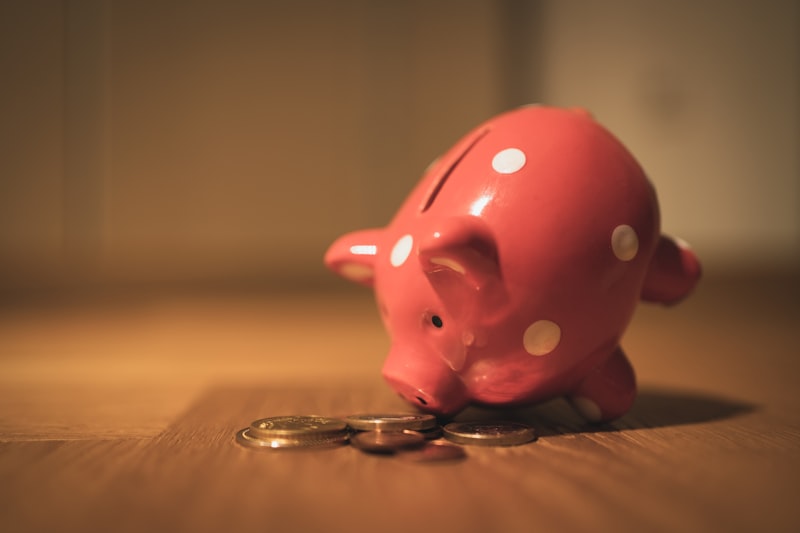
Three years of automated saving, one significant decision, and a lot of leaving it alone.
Year One: Automating the Foundation ($0 to $12,000)
The first decision I made was where to put the money. A checking account was out — too easy to spend, earns nothing. I opened a high-yield savings account with a different bank than my checking account (this matters — friction between you and the money reduces impulse withdrawals). In 2023, HYSAs were earning 4-5% APY; I opened with Marcus by Goldman Sachs at 4.5%.
The second decision was automation. I set up a $600/month automatic transfer to the HYSA on the day after my paycheck arrived. Not a transfer I manually approved each month — an automatic one I'd have to actively cancel to stop. That psychological difference is larger than it sounds. In 12 months of manual saving, I'd saved $2,400. In the first 12 months of automated saving, I saved $7,200 — plus $340 in interest. Year one total: approximately $7,540.
🔥 The automation insight that changed everything
The Cost Audit That Found $400/Month
Six months in, I did a full audit of my spending — every recurring charge, every subscription, every "I thought I cancelled that" item. What I found: $387/month in spending I didn't notice or care about. Two gym memberships (I joined a new gym and forgot to cancel the old one). Four streaming services I watched for two weeks each. A meal kit subscription I'd paused but not cancelled. A software subscription for a tool I hadn't opened in eight months.
I cancelled everything, increased my automatic savings transfer from $600 to $1,000/month, and kept living essentially the same life. This is the single most effective lever I found — not earning more, not extreme frugality, but stopping the bleeding from forgotten subscriptions and unused services.
Year Two: Income Growth and the Raise Rule ($12,000 to $30,000)
Eighteen months in, I got a promotion and a $11,000 salary increase. I made one rule immediately: all new income goes to savings until the emergency fund is done. Not half. Not a percentage. All of it. I was already living on my old salary; I didn't need the new money to maintain my lifestyle. This is what personal finance writers call "lifestyle inflation prevention," and it's extremely hard to do without a pre-committed rule.
The raise translated to roughly $680/month additional take-home after taxes. Combined with my existing $1,000/month automated transfer, I was now saving $1,680/month. By the end of year two, the fund had grown from $12,000 to $30,200 — including approximately $1,100 in compound interest from the HYSA.
Year Three: The Finish Line ($30,000 to $50,000)
Year three was the most psychologically interesting. At $30,000, I was past the "basic emergency" stage — no car repair, medical bill, or surprise expense was going to ruin me. The anxiety that had motivated me was mostly gone. This is the danger zone: when the pain that drove the behavior disappears, the behavior often disappears with it.
What kept me going: I had started a small freelance side project in year two that was earning $300-800/month inconsistently. Rather than treating it as spending money, I set up a second automated transfer from my freelance account to the HYSA — not a fixed amount, but a percentage rule: 70% of all freelance income went to savings. By the end of year three, the emergency fund hit $50,400.
The Full Savings Timeline
| Period | Monthly Savings | Interest Earned | Cumulative Total |
|---|---|---|---|
| Year 1 (months 1-12) | $600/month automated | $340 | $7,540 |
| Year 1 (months 13-18) | $1,000/month (after cost audit) | $380 | $13,920 |
| Year 2 (months 19-30) | $1,680/month (after raise) | $850 | $31,050 |
| Year 3 (months 31-36) | $1,680 + freelance 70% | $1,200 | $50,400 |
Where to Keep a Large Emergency Fund
A high-yield savings account remains the right vehicle for most people. In 2026, top HYSA rates from institutions like Marcus, SoFi, and Ally are 4.5-5.2% APY — meaningfully above inflation for liquid cash. FDIC insured up to $250,000, accessible within 1-2 business days. Don't keep this in a checking account (too easy to spend), and don't invest it in stocks (too volatile for emergency use).
Some people split a large emergency fund: months 1-3 of expenses in a HYSA (fully liquid), months 4-6 in 3-month Treasury bills via TreasuryDirect (slightly higher yield, 3-month lock-up). This captures a small yield premium on the portion you're less likely to need quickly.
💰 The interest math at $50,000
FAQ
How long does it take to save $50,000?+
Is $50,000 too much for an emergency fund?+
Where should you keep a large emergency fund?+
Related reading
The 50/30/20 Budget Rule in 2026 · 7 Ways to Make Passive Income with AI
Keep Reading
Try Our Free Tools
Want more guides like this?
Join 50K+ readers getting weekly tips on AI, automation & making money online.
Subscribe Free