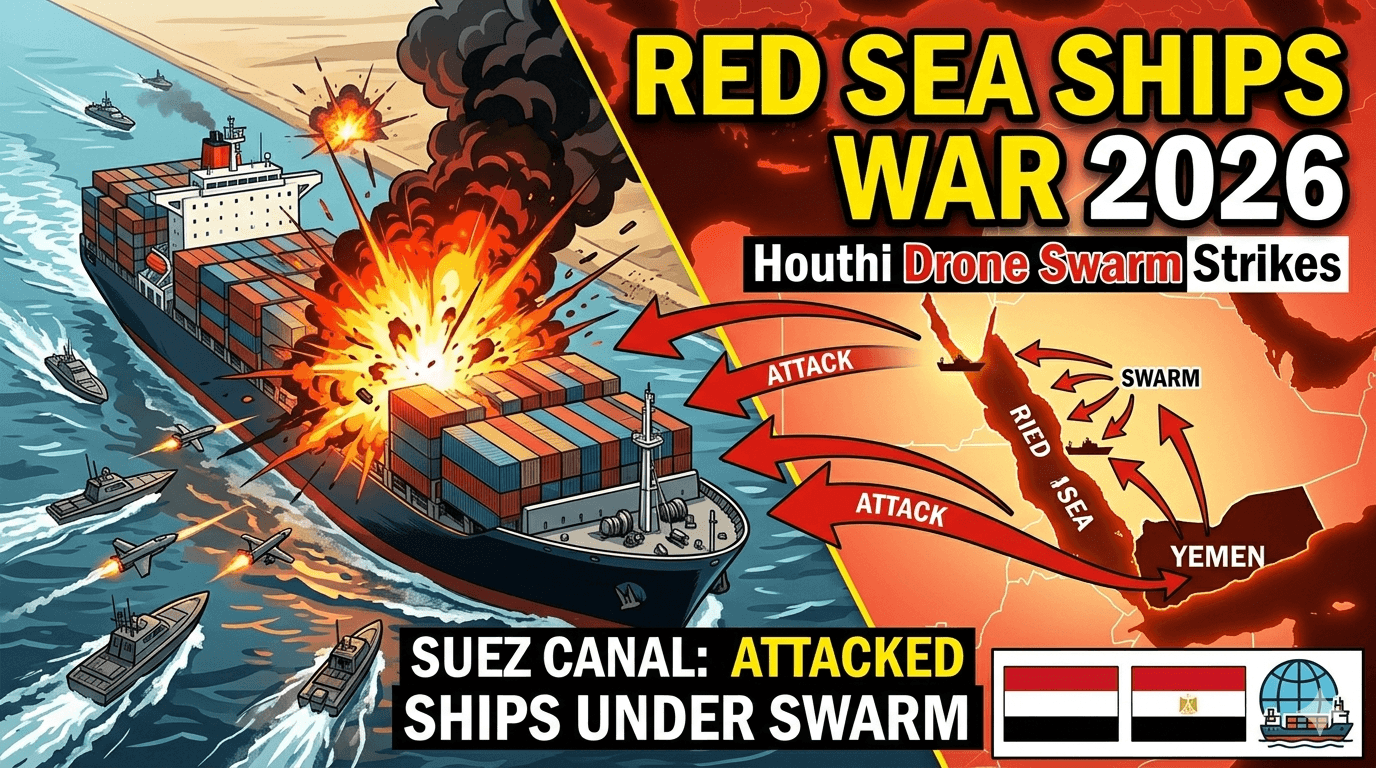
Red Sea Crisis 2026 — Houthi Attacks, Suez Canal Collapse & Global Shipping Chaos
Back to Blog
NewsTrendingRed Sea CrisisHouthi Attacks

Red Sea Crisis 2026 — Houthi Attacks, Suez Canal Collapse & Global Shipping Chaos

Mar 31, 202610 min readClickWise Editorial

BREAKING — Updated March 31, 2026

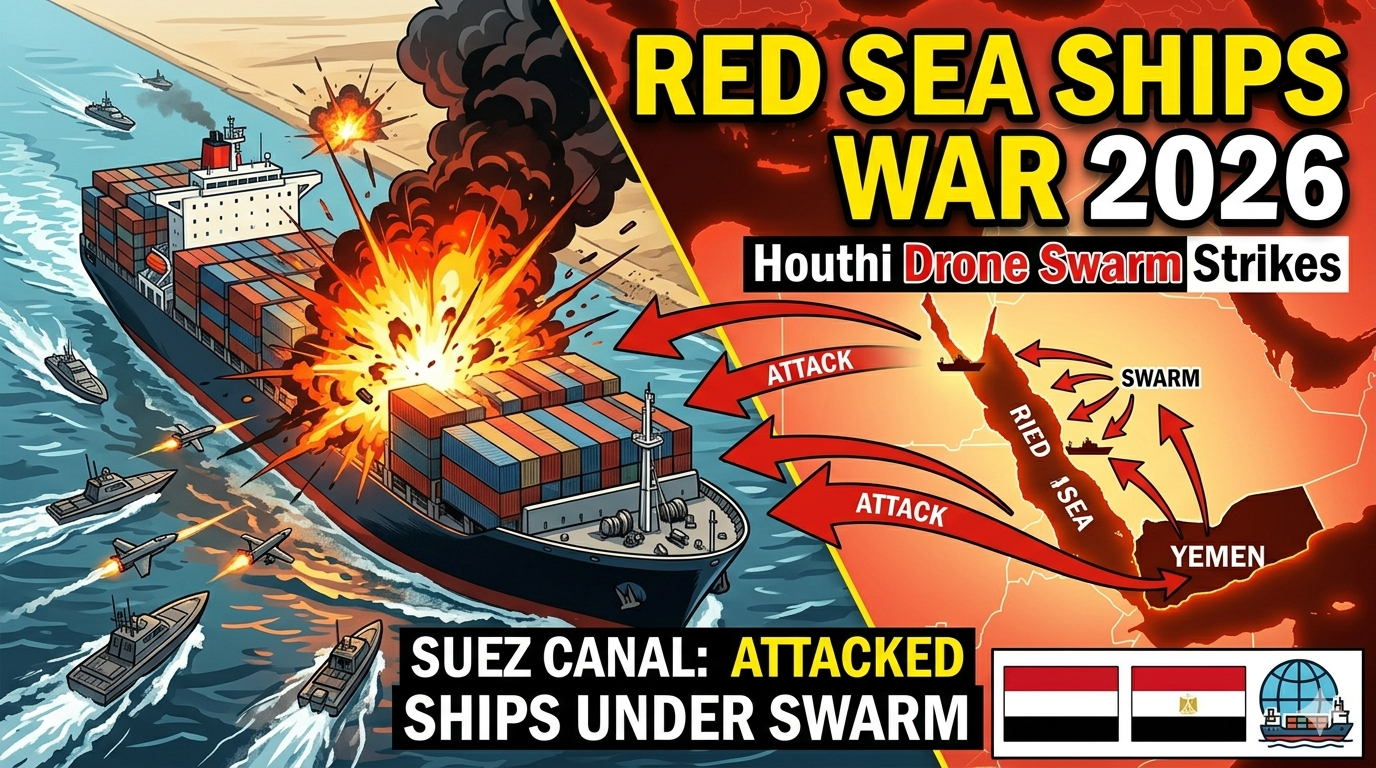
The Red Sea — one of the most important shipping corridors on earth — is now a war zone. Houthi rebels from Yemen have been attacking commercial ships, oil tankers, and US warships since October 2023. But since the Iran-US war erupted on February 28, 2026, the attacks have escalated dramatically. Suez Canal traffic has collapsed, global shipping costs have tripled, and the economic shockwaves are hitting supermarkets, fuel pumps, and supply chains worldwide. This is the full picture of what is happening and what it means for you.
60%+
Drop in Suez Canal Traffic
Rise in Shipping Costs
300+
Ships Attacked Since Oct 2023
$200B+
Annual Trade at Risk
Red Sea Crisis 2026 — Houthi Attacks and Suez Canal Collapse

The Red Sea corridor — responsible for 12% of global trade — has become a war zone in 2026

Why Is the Red Sea So Important?

The Red Sea connects the Mediterranean Sea to the Indian Ocean through the Suez Canal — a route used by roughly 12% of all global trade and about 30% of global container shipping. Every day, hundreds of ships pass through carrying oil, gas, consumer goods, raw materials, and food. It is the fastest route between Europe and Asia. When it shuts down, the whole world feels it. To understand why the Houthis are attacking this route, read our full Houthis entering the war explainer.

The Red Sea by the Numbers
12%of all global trade passes through the Red Sea annually — roughly $1 trillion in goods per year.
30%of global container shipping uses this route — clothing, electronics, cars, food, chemicals.
15%of global oil and LNG shipments transit the Red Sea each year.
Suez AlternativeWithout the Suez Canal, ships must sail around the Cape of Good Hope (South Africa), adding 10–14 days and $1–2 million per voyage in extra fuel costs.
Bab-el-Mandeb StraitThe narrow chokepoint at the southern entrance — just 30km wide — is what the Houthis control from Yemen's coastline. Block this, and the whole route shuts down.

What Have the Houthis Actually Done?

Since October 2023, the Houthis have conducted the most sustained maritime assault by a non-state actor in modern history. Initially targeting ships linked to Israel, they expanded their attacks to any vessel they deemed connected to the US or UK. Since the Iran-US war began in February 2026, the attacks have become near-daily. Reuters has tracked every confirmed Houthi maritime attack since the crisis began.

Weapon UsedNumber of IncidentsNotable TargetsEffect
Anti-ship ballistic missiles45+US warships, tankersSeveral near misses, 2 ships sunk
Cruise missiles60+Commercial vesselsMultiple ships damaged and abandoned
Suicide drones (Shahed)100+Bulk carriers, container shipsFires, crew casualties, 1 ship sunk
Naval mines12+Shipping lanes2 ships hit, lane diversions forced
Speedboat raids8Cargo shipsGalaxy Leader seized Nov 2023, crew held

How Has Global Shipping Responded?

The shipping industry's response has been massive and swift. Major carriers began diverting vessels around the Cape of Good Hope in December 2023. By March 2026, the diversion has become the industry standard rather than the exception. The financial consequences are enormous — and ultimately paid by consumers everywhere.

Shipping Industry Response Timeline
Dec 2023Maersk, MSC, CMA CGM — the world's three largest shipping companies — suspend Red Sea transits and reroute around Africa.
Jan 2024US and UK launch Operation Prosperity Guardian — naval coalition striking Houthi missile sites in Yemen.
Mar 2024Suez Canal Authority reports 50% drop in vessel transits. Canal toll revenues collapse by $600M+ per month.
Feb 28, 2026Iran-US war begins. Houthi attacks escalate from weekly to near-daily.
Mar 2026Suez Canal traffic at its lowest level since the 1967 Arab-Israeli war. Over 60% of normal traffic now rerouting.

What Is It Doing to Prices?

This is where the Red Sea crisis stops being an abstract geopolitical event and becomes your weekly shopping bill. The cost of shipping a standard 40-foot container from Asia to Europe has risen from around $1,500 in early 2023 to over $5,500 in March 2026 — with some spot rates exceeding $7,000. Those costs travel directly through supply chains to retail prices.

Price Impact Across Sectors
Consumer ElectronicsSmartphones, laptops, and TVs assembled in Asia and shipped to Europe are facing 8–12% price increases due to longer routes and higher freight costs.
Clothing & Fast FashionEuropean fast fashion retailers sourcing from Bangladesh and India — previously a 2-week Red Sea voyage — now face 5–6 week supply chains via the Cape.
Oil & FuelOil tankers avoiding the Red Sea are adding massive voyage costs. Combined with the Iran war disrupting Gulf supply, this is a key driver of the 2026 oil price spike. Read our <a href='/blog/petrol-prices-skyrocket-war-impact-2026' style='color: #a855f7; text-decoration: underline;'>petrol price breakdown</a> for full detail.
Food PricesGrain shipments from Black Sea ports and Middle Eastern food imports face delays and higher costs — contributing to grocery inflation across Europe and Africa.
Insurance CostsWar risk insurance premiums for Red Sea transits have risen 900% since 2023. Most insurers now refuse to cover this route at any price.

Can the US Military Stop the Attacks?

The US has been striking Houthi missile sites, radar installations, and launch infrastructure in Yemen since January 2024 — over 14 months of continuous bombardment. The result: the attacks have not stopped. They have intensified. BBC News has reported extensively on why US strikes have failed to degrade Houthi capabilities.

Why US Strikes Are Not Working
Mobile LaunchersThe Houthis use truck-mounted mobile missile launchers that can be moved in minutes. They are nearly impossible to target from the air before they fire and relocate.
Underground StockpilesDecades of Iranian weapons smuggling has given the Houthis vast underground weapon caches across Yemen's mountains — too dispersed and buried to destroy from the air.
No Ground ForcesEffective suppression requires ground troops in Yemen — something no country is willing to commit given the Afghanistan precedent. Without boots on the ground, the strikes are whack-a-mole.
Public SupportHouthi attacks on Israel and US ships are enormously popular in Yemen. Strikes that kill civilians are creating more fighters than they eliminate.
Iranian ResupplyEven as some stockpiles are destroyed, Iran continues to smuggle replacement weapons through Oman and via sea routes. The tap cannot be turned off from the air.

Which Countries Are Hit Hardest?

Region / CountryKey Dependency on Red SeaImpact Level
Europe (especially Germany, UK, Italy)Primary route for Asia importsSevere — 10-14 day delays, price rises
EgyptSuez Canal revenues = 2% of GDPCritical — losing $1B+ per month
East Africa (Ethiopia, Kenya, Somalia)Most imports arrive via Red SeaSevere — food and fuel shortages
IndiaExports to Europe routed through Red SeaHigh — shipping costs doubled for exporters
ChinaManufactures most goods shipped through Red Sea to EuropeHigh — exporters absorbing freight costs
USALess dependent — Pacific and Atlantic routes availableModerate — mainly energy price impact

The biggest diplomatic casualty is Egypt, which earns roughly $9–10 billion per year from Suez Canal tolls. With traffic down 60%, the Egyptian economy — already struggling — faces a severe fiscal crisis. This is adding regional political pressure to end the war quickly. For the broader picture of how many countries are affected by the Iran war, see our full countries involved breakdown.

Why are Houthis attacking ships in the Red Sea?+
The Houthis say they are attacking ships linked to Israel, the US, or the UK in solidarity with Palestinians in Gaza and, since February 2026, in response to the US-Israel war on Iran. In practice, they have attacked vessels from dozens of nations with no direct connection to Israel — making the Red Sea dangerous for all shipping.
Has the Suez Canal been completely closed?+
No — the Suez Canal itself remains open and operational. What has happened is that shipping companies have voluntarily stopped using it because the southern entrance (through the Bab-el-Mandeb Strait controlled by Houthis) is too dangerous. Traffic has dropped over 60% from normal levels.
How long will the Red Sea crisis last?+
The crisis will last as long as the Houthis have weapons and motivation to attack — which means as long as the Iran-US war continues and no ground campaign is launched in Yemen. Military analysts estimate the crisis could persist throughout 2026 and potentially into 2027.
Is it safe for ships to pass through the Red Sea in 2026?+
No major shipping line considers the Red Sea safe without naval escort. Insurance is near-impossible to obtain. The US Navy escorts some vessels but cannot protect all commercial traffic. The risk of missile, drone, or mine attack is real and ongoing.
How does the Red Sea crisis affect me personally?+
If you live in Europe, the UK, or Africa, you are already feeling it in higher prices for electronics, clothing, food, and fuel. Inflation figures in early 2026 show shipping costs as a measurable contributor to consumer price increases. In the UK, analysts estimate the Red Sea disruption is adding 0.3–0.5% to annual inflation.
Will the Red Sea crisis cause a global recession?+
By itself, no — but combined with the Iran war disrupting Gulf oil supply, rising energy prices, and broader geopolitical uncertainty, it is a significant headwind for global growth. The IMF has cut 2026 global GDP forecasts by 0.4% citing the Red Sea and Iran war combined.
#Red Sea Crisis#Houthi Attacks#Suez Canal 2026#Global Shipping#Breaking News