
How to Start a Newsletter in 2026 and Make Your First $1,000
Newsletter income is real — but most people pick the wrong niche, publish twice and quit, or choose a platform that fights their growth. Here's the no-fluff guide.
The newsletter economy has matured significantly. It's harder to start a generalist newsletter and win in 2026 than it was in 2021. But hyper-specific newsletters serving defined professional or interest communities are still building substantial audiences and income — because they're useful in a way that algorithms can't replicate.
What this guide covers
- ✓Niche selection — the single most important decision
- ✓Platform comparison: Beehiiv vs Substack vs Kit
- ✓Growth tactics that work in 2026 without a big budget
- ✓Three monetization models and when to use each
- ✓A realistic 12-month timeline from zero to $1,000/month
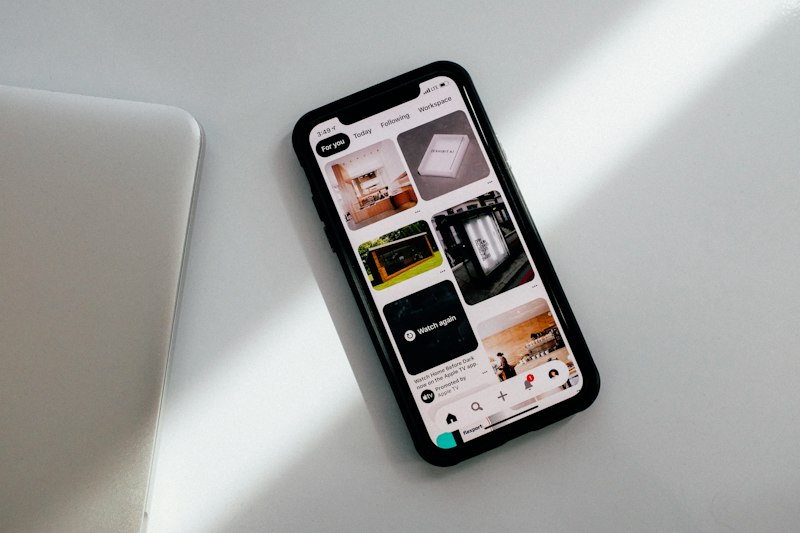
The newsletter economy is still growing — but niche focus is now non-negotiable.
Step 1: Niche Selection (Most Important Decision)
The most common newsletter mistake is writing about something too broad — "productivity," "technology," "health." These categories are dominated by massive publications with millions of subscribers and PR teams. The newsletters winning in 2026 are specific: "AI tools for independent financial advisors," "remote job listings for UX designers," "weekly summary of FDA approvals for biotech investors."
A good niche has three properties: there's an audience that actively searches for this information, the information is hard to find in one place, and you either have expertise or access to expertise. The narrower the niche, the easier it is to become the definitive source — which is where subscriber loyalty and word-of-mouth come from.
🔥 The niche test
Step 2: Platform Choice
| Platform | Best for | Key features | Revenue cut |
|---|---|---|---|
| Beehiiv | Growth-focused newsletters | Built-in referral program, ad network, detailed analytics, free up to 2,500 subscribers | 0% on paid subscriptions |
| Substack | Paid subscription model | Built-in discovery, podcast support, Notes (Twitter-like feed), strong community | 10% of subscription revenue |
| Kit (ConvertKit) | Creators with existing audiences | Best email automation, landing pages, commerce, integrates with everything | $25-50/month (no rev cut) |
| Ghost | Full ownership, custom domain | Self-hosted option, membership tiers, no platform dependency | $9-199/month (no rev cut) |
For a new newsletter focused on growth through content and referrals, Beehiiv is the strongest choice in 2026 — the referral program is genuinely effective, the ad network lets you monetize without a paid subscription tier, and the free plan is generous. Substack is better if your audience pays for information and you want to leverage Substack's existing reader base for discovery.
Step 3: Growing Your First 1,000 Subscribers
The first 1,000 subscribers are the hardest. Growth tactics that actually work in 2026 — without a large existing audience or budget:
Step 4: Monetization Models
There are three main newsletter monetization models, and the right one depends on your niche and audience:
Sponsorships — Brands pay you to feature their product or service in your newsletter. Accessible at 1,000-2,000 subscribers in a defined niche. Typical CPM is $20-50 per 1,000 subscribers per issue. A 2,000-subscriber newsletter sending weekly can earn $40-100 per sponsor per issue — $160-400/month with one consistent sponsor. Scales linearly with subscriber count.
Paid subscriptions — Charge readers directly for premium content. Works best when your newsletter saves time, makes money, or delivers unique information readers can't get elsewhere. The standard conversion rate from free to paid is 1-5%. A 10,000-subscriber newsletter converting 2% at $8/month earns $1,600/month from subscriptions.
Backend products and services — Use the newsletter to sell your own products (courses, consulting, community). The highest-margin model and the least dependent on subscriber count — a 500-subscriber newsletter selling a $500 course to 2% of readers earns $5,000 per launch.
Realistic 12-Month Timeline
| Month | Milestone | Target Revenue |
|---|---|---|
| Month 1-2 | Launch, first 10 issues, first 200 subscribers via warm network and communities | $0 |
| Month 3-4 | 500 subscribers, consistent cadence, first cross-promotion deal | $0-100 (first small sponsor) |
| Month 5-6 | 1,000 subscribers, pitch first real sponsors, add referral program | $100-400/month |
| Month 7-9 | 2,000 subscribers, consistent sponsorship revenue, test paid tier | $400-800/month |
| Month 10-12 | 3,000-5,000 subscribers, 2 sponsors per issue or paid tier launch | $800-1,500/month |
FAQ
How long does it take to make money from a newsletter?+
Should I use Beehiiv or Substack in 2026?+
How many subscribers do you need to make money?+
Keep Reading
Try Our Free Tools
Want more guides like this?
Join 50K+ readers getting weekly tips on AI, automation & making money online.
Subscribe Free