
I Walked 10,000 Steps Every Day for 60 Days. Here's What Actually Changed
I didn't lose 20 pounds. I didn't transform my body. But 60 days of 10,000 daily steps did change a handful of things measurably — some I expected, some I didn't.
The 10,000 steps number is famously arbitrary — it came from a 1960s Japanese pedometer marketing campaign, not a medical recommendation. But there's real research behind daily walking as a health intervention, and I wanted to run the experiment honestly: what actually changes when you walk 10,000 steps every day for two months? Not what the wellness industry says. What actually happened.
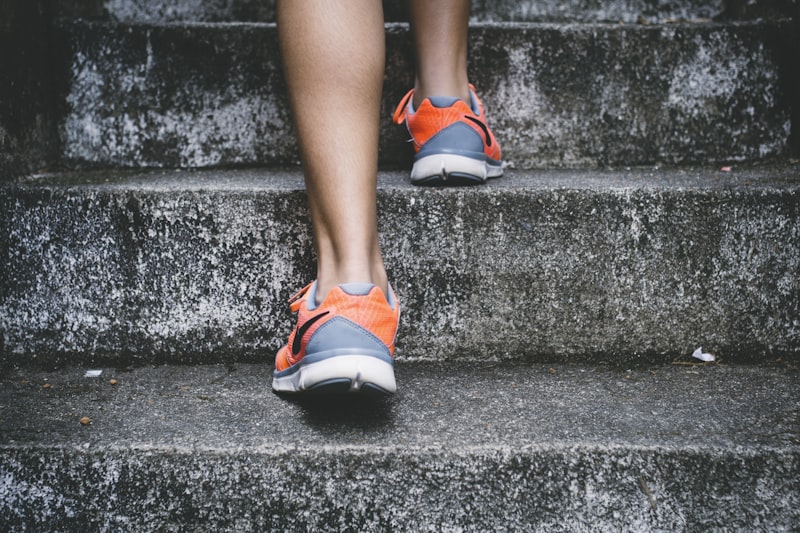
60 days, 600,000 steps, honest results.
The Starting Conditions
I started the experiment averaging about 3,500-4,500 steps per day — a typical sedentary knowledge-worker baseline. I work from home, my commute is ten feet from my bedroom to my desk, and my natural daily movement was low. I tracked with a Garmin Forerunner and kept everything else constant: same diet, no new exercise, same sleep schedule.
Hitting 10,000 steps from a 4,000-step baseline required roughly 45-60 minutes of deliberate walking per day — split between a morning walk before work and a post-dinner walk. I live in a neighborhood with sidewalks, which made this practical. If you live somewhere that requires driving to a walking location, the time commitment would be higher.
What Changed (With Numbers)
Weight: I lost 4.2 lbs over 60 days without any dietary changes. This aligns with the rough math: 6,000 additional steps per day burns approximately 200-250 extra calories, which over 60 days is a modest but real caloric deficit. I was not expecting dramatic weight loss and I didn't get it — but 4 lbs in two months without changing my diet at all is a meaningful result.
Resting heart rate: Dropped from 74 bpm (baseline average) to 68 bpm by day 45 and held there. A 6 bpm drop in resting heart rate is a significant cardiovascular improvement — lower resting heart rate is associated with better heart health, longer lifespan, and better recovery from exertion.
Sleep quality: My Garmin sleep score improved from an average of 68 (baseline) to 80 by day 30 and stayed there. More specifically: I fell asleep faster (down from ~25 minutes to ~12 minutes average) and had less light sleep and more deep sleep per night. The walking-sleep connection is well-supported in research — increased daily movement improves sleep pressure (adenosine buildup) and circadian rhythm regulation.
Mood and anxiety: This is the hardest to quantify, but the most noticeable. By week 3, I noticed I was less reactive in frustrating situations, and my general background anxiety — the low-level hum that's hard to name but easy to feel — was quieter. I didn't journal consistently enough to have hard data on this, but it was the change I noticed most subjectively.
What Didn't Change
Honest reporting requires saying what didn't change, because the wellness world tends to oversell walking experiments. My visible body composition was essentially unchanged — 4 lbs is not a visible transformation, and without dietary changes or resistance training, body composition shifts slowly. My productivity metrics (tracked via RescueTime) didn't change meaningfully — I'd hoped the mood improvement would translate to more focused work, but my deep work hours per day were the same.
Energy levels: improved significantly in weeks 1-2, leveled off to normal after week 3. This is common — the initial energy boost from increased movement normalizes as your body adapts. After 60 days, I didn't feel more energized than baseline; I felt the same, which is fine because my sleep was better and my resting heart rate was lower.
💡 The research on 10,000 steps
The Practical Side: Making It Actually Happen
The logistics of 10,000 steps when you work from home full-time are real. My solutions: a fixed morning walk before opening my laptop (30 minutes, ~3,500 steps) — non-negotiable, happens before email. Walking phone calls instead of sitting ones — I switched every non-video call to a walking call, which added 1,000-2,000 steps on busy meeting days. An after-dinner walk with a podcast (20-30 minutes, ~2,500 steps) — this replaced evening couch time and significantly helped sleep onset.
On days where logistics made the full count hard (heavy rain, fully remote schedule with back-to-back calls), I set 7,500 as the backup target. Over 60 days I missed 10,000 on 8 days but hit 7,500+ on all but 2. For the purposes of what the research measures, this was close enough.
After 60 Days: What I'm Keeping
I didn't stop. The morning walk is now a permanent part of my routine — not because I'm tracking steps, but because it genuinely changed my mornings. I go outside, I clear my head, and I arrive at my desk better than I would have otherwise. The evening walk stayed too, though I'm less strict about completing it on busy nights.
I stopped tracking step count. The experiment was useful for calibration — now I know what 10,000 steps feels like and I have rough intuition for whether I'm hitting it. Tracking the number stopped adding value once the habit was established.
FAQ
Does walking 10,000 steps a day really work?+
How long does it take to see results from walking 10,000 steps?+
Is 10,000 steps a day enough exercise?+
Keep Reading


Try Our Free Tools
Want more guides like this?
Join 50K+ readers getting weekly tips on AI, automation & making money online.
Subscribe Free